
Indonesia Palm Oil Market Outlook to 2029
By Market Structure, By Production Trends, By Export Markets, By Domestic Consumption, By End-Use Industries, and By Region
Report Overview
Report Code
TDR0107
Coverage
Asia
Published
December 2024
Pages
80-100
Flexible Purchase Options
Select and purchase only the chapters you need for your strategic decisions
On This Page
Report Overview
The report titled “Indonesia Palm Oil Market Outlook to 2029 - By Market Structure, By Production Trends, By Export Markets, By Domestic Consumption, By End-Use Industries, and By Region” provides a comprehensive analysis of the palm oil market in Indonesia. The report covers an overview and genesis of the industry, overall market size in terms of revenue, market segmentation; trends and developments, regulatory landscape, customer-level profiling, issues and challenges, and comparative landscape including competition scenario, cross-comparison, opportunities and bottlenecks, and company profiling of major players in the Indonesia Palm Oil Market.
Report Coverage
Verified Market Sizing
Multi-layer forecasting with historical data and 5–10 year outlook
Deep-Dive Segmentation
Cross-sectional analysis by product type, end user, application and region
Competitive Benchmarking & Positioning
Market share, operating model, pricing and competition matrices
Actionable Insights & Risk Assessment
High-growth white spaces, underserved segments, technology disruptions and demand inflection points
Review Methodology & Data Structure
Preview report structure, data sources and research framework
Executive Summary
The report titled “Indonesia Palm Oil Market Outlook to 2029 - By Market Structure, By Production Trends, By Export Markets, By Domestic Consumption, By End-Use Industries, and By Region” provides a comprehensive analysis of the palm oil market in Indonesia. The report covers an overview and genesis of the industry, overall market size in terms of revenue, market segmentation; trends and developments, regulatory landscape, customer-level profiling, issues and challenges, and comparative landscape including competition scenario, cross-comparison, opportunities and bottlenecks, and company profiling of major players in the Indonesia Palm Oil Market. The report concludes with future market projections based on production, consumption, export volumes, regions, cause-and-effect relationships, and success case studies highlighting major opportunities and cautions.
Indonesia Palm Oil Market Overview and Size
The Indonesia palm oil market reached a valuation of USD 30 billion in 2023, driven by increasing global demand for vegetable oils, growing consumption of biodiesel, and rising awareness of sustainable palm oil production practices. Indonesia is the world's largest producer and exporter of palm oil, accounting for approximately 60% of global output. Key players in the market include Wilmar International, Golden Agri-Resources, Musim Mas, and Indofood Agri Resources, all recognized for their extensive plantation assets, strong export networks, and innovation in downstream processing.
In 2023, Wilmar International announced an initiative to strengthen sustainable palm oil sourcing through digital traceability tools and collaborations with smallholder farmers. Key production regions, including Sumatra and Kalimantan, continue to dominate the market due to their favorable climatic conditions and extensive plantation infrastructure.
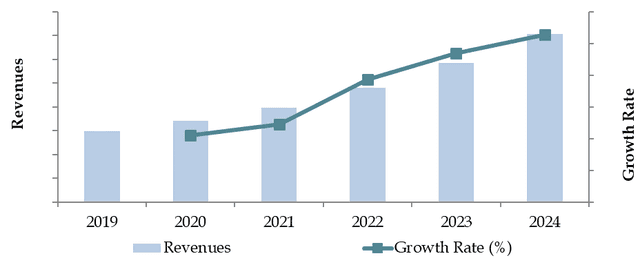
Market Size for Indonesia Palm Oil Industry on the Basis of Revenues in USD Billion, 2018-2024
What Factors are Leading to the Growth of the Indonesia Palm Oil Market
Economic Factors: The increasing global demand for vegetable oils, coupled with Indonesia's cost-effective production methods, has positioned the country as the largest palm oil producer globally. In 2023, palm oil exports contributed approximately 12% of Indonesia’s total export revenue. The affordability and versatility of palm oil have made it a preferred choice for both domestic consumption and international markets, driving consistent growth in production and trade.
Rising Global Food and Biofuel Demand: The growing need for edible oils and renewable energy sources has significantly boosted the palm oil industry in Indonesia. Palm oil, being a key raw material in food manufacturing and biofuel production, has seen increased demand from both developed and developing countries. In 2023, approximately 70% of Indonesia's palm oil output was exported, with China, India, and the EU being major importers.
Government Support and Policies: The Indonesian government has implemented policies and incentives to support the palm oil industry, including the B30 biodiesel mandate, which requires a 30% blend of palm oil in diesel fuel. This initiative has stimulated domestic consumption and reduced dependency on fossil fuels. In 2023, the mandate led to a 15% increase in domestic palm oil usage compared to the previous year.
Which Industry Challenges Have Impacted the Growth of the Indonesia Palm Oil Market
Environmental Concerns and Sustainability Issues: The palm oil industry in Indonesia has faced criticism due to deforestation, biodiversity loss, and greenhouse gas emissions associated with plantation development. According to recent data, approximately 18% of Indonesia's palm oil plantations are located in areas classified as forest reserves, creating tension between environmental groups and industry stakeholders. These concerns have led to stricter regulations and decreased market appeal in environmentally conscious export markets.
Supply Chain Transparency: The lack of transparency and traceability in the supply chain remains a significant challenge for the Indonesian palm oil industry. A 2023 industry survey revealed that 40% of palm oil buyers faced difficulties verifying whether their products adhered to sustainability standards, such as the Roundtable on Sustainable Palm Oil (RSPO) certification. This issue has resulted in reduced trust among international buyers and limited access to premium markets.
Labor Issues: Reports of poor working conditions, low wages, and child labor in some plantations have tarnished the industry’s reputation. In 2023, around 25% of surveyed plantation workers reported inadequate access to basic facilities and fair compensation. These issues not only harm Indonesia’s global standing but also lead to increased scrutiny from international watchdogs and trade partners.
What Are the Regulations and Initiatives Which Have Governed the Market
Moratorium on New Plantations: The Indonesian government has extended a moratorium on the issuance of new licenses for palm oil plantations on primary forests and peatlands. This policy, introduced in 2018 and extended through 2023, aims to reduce deforestation and promote sustainable land use practices.
Mandatory Sustainability Certification: To enhance sustainability, the government has made the Indonesian Sustainable Palm Oil (ISPO) certification mandatory for all producers. In 2023, 85% of large-scale plantations were ISPO-certified, reflecting a significant compliance rate among major producers. However, smallholder farmers face challenges in meeting certification requirements due to limited resources.
Export Levy on Palm Oil: Indonesia has imposed a progressive export levy on palm oil products to fund replanting programs and biodiesel subsidies. In 2023, approximately $1.2 billion was collected through export levies, which was reinvested in industry improvements, including smallholder support and infrastructure development.
Indonesia Palm Oil Market Segmentation
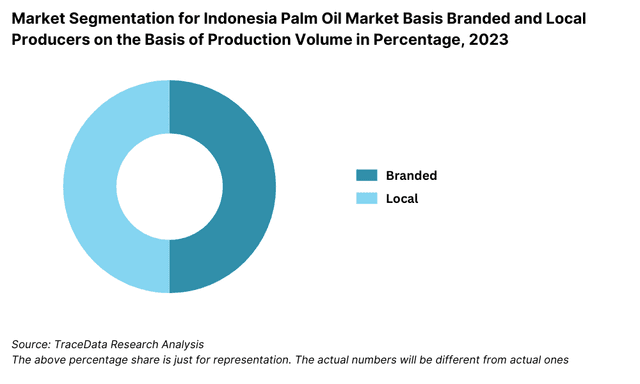
By Market Structure: The palm oil market in Indonesia is dominated by large-scale plantation companies, which account for the majority of production due to their advanced infrastructure, high productivity levels, and ability to meet export demands. Smallholder farmers also play a crucial role, contributing approximately 40% of total production. Despite challenges in accessing technology and funding, smallholders are increasingly integrating sustainable practices to maintain market relevance.
By Export Markets: Indonesia’s primary export markets include India, China, and the European Union. India leads as the largest importer, accounting for approximately 30% of Indonesia’s palm oil exports in 2023, driven by high demand for edible oils. China follows closely, with palm oil being a key ingredient in food processing and cooking. The EU remains a significant market despite ongoing scrutiny over sustainability issues, reflecting demand for certified sustainable palm oil (CSPO).
By End-Use Industries: The food and beverage industry dominates palm oil consumption, utilizing approximately 60% of total production for cooking oil, margarine, and processed foods. The biodiesel industry accounts for 20% of domestic consumption, supported by the government’s B30 biodiesel mandate. Other industries, such as cosmetics and pharmaceuticals, contribute the remaining share, leveraging palm oil derivatives for their diverse applications.
Competitive Landscape in Indonesia Palm Oil Market
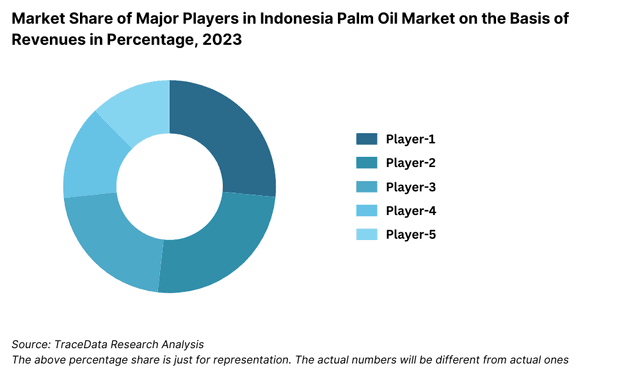
The Indonesia palm oil market is highly competitive, with a mix of large-scale plantation companies, cooperatives, and smallholder farmers dominating the landscape. Major players such as Wilmar International, Golden Agri-Resources, Musim Mas, Asian Agri, and Astra Agro Lestari are leading the market, supported by advanced infrastructure, robust export networks, and strong government backing.
| Company Name | Establishment Year | Headquarters |
|---|---|---|
| PT Sinar Mas Agro Resources and Technology (SMART) | 1962 | Jakarta, Indonesia |
| PT Astra Agro Lestari Tbk | 1988 | Jakarta, Indonesia |
| PT Salim Ivomas Pratama Tbk | 1992 | Jakarta, Indonesia |
| PT Triputra Agro Persada | 2005 | Jakarta, Indonesia |
| PT Eagle High Plantations Tbk | 2000 | Jakarta, Indonesia |
| Asian Agri | 1979 | Jakarta, Indonesia |
| Wilmar International | 1991 | Singapore |
| Golden Agri-Resources | 1996 | Singapore |
| PT PP London Sumatra Indonesia Tbk | 1906 | Jakarta, Indonesia |
| PT Sampoerna Agro Tbk | 1993 | Jakarta, Indonesia |
Some of the recent competitor trends and key information about competitors include:
Wilmar International: In 2023, Wilmar International reported a 10% increase in revenue, driven by strong export demand and investments in sustainability initiatives. The company expanded its refining capacity and strengthened its RSPO certification coverage, making it a preferred supplier in premium markets like the EU.
Golden Agri-Resources: Golden Agri-Resources saw a 15% growth in biodiesel sales in 2023, driven by the Indonesian government's B30 biodiesel mandate. The company also invested in digital tools to improve plantation productivity and traceability, helping to meet global sustainability demands.
Musim Mas: As a vertically integrated player, Musim Mas has focused on building downstream capabilities, such as oleochemical production. In 2023, the company recorded a 12% increase in exports to China and India, supported by its extensive distribution network and competitive pricing.
Asian Agri: Asian Agri is a leader in smallholder partnerships, collaborating with over 30,000 farmers to improve yields and sustainability. In 2023, the company reported a 20% increase in smallholder production volumes, attributed to training programs and financial support initiatives.
Astra Agro Lestari: Known for its innovation in plantation management, Astra Agro Lestari introduced AI-powered monitoring tools in 2023, resulting in a 5% improvement in yields. The company also achieved 90% ISPO certification across its plantations, enhancing its reputation in sustainable production.
What Lies Ahead for Indonesia Palm Oil Market?
The Indonesia palm oil market is projected to grow steadily by 2029, driven by increasing global demand for vegetable oils, government mandates for biodiesel, and advancements in sustainable production practices. This growth is expected to be supported by innovations in technology, export expansion, and regulatory measures promoting sustainability.
Expansion of Biodiesel Programs: Indonesia’s commitment to renewable energy through programs like the B35 biodiesel mandate, set to roll out by 2024, is expected to drive significant domestic demand for palm oil. This initiative not only reduces reliance on fossil fuels but also stabilizes the local palm oil market against global price volatility.
Focus on Sustainable Certification: Global demand for sustainably produced palm oil is anticipated to rise, particularly from markets in the EU and North America. Indonesia’s push for widespread adoption of ISPO and RSPO certifications will likely enhance its market share in premium export markets. By 2029, it is projected that over 90% of large-scale plantations will be sustainably certified.
Diversification into Downstream Industries: The palm oil industry is expected to see significant growth in downstream segments such as oleochemicals, food processing, and personal care products. These value-added applications will help Indonesia capture higher margins and reduce dependency on raw palm oil exports.
Advancements in Technology: The integration of AI, drones, and satellite imagery for plantation monitoring and yield optimization is expected to enhance productivity and cost-efficiency. These technological innovations will help Indonesia maintain its leadership position in global palm oil production while addressing concerns over deforestation and inefficient land use.
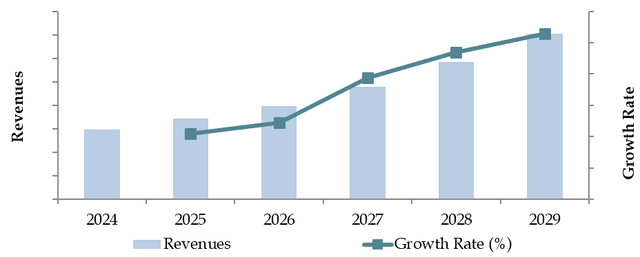
Future Outlook and Projections for Indonesia Palm Oil Market on the Basis of Revenues in USD Billion, 2024-2029
Indonesia Palm Oil Market Segmentation
• By Market Structure:
Branded
Local Players
• By Export Markets:
India
China
European Union
Middle East
Africa
Southeast Asia
• By End-Use Industries:
Food and Beverage Industry
Biodiesel Production
Cosmetics and Personal Care Products
Pharmaceuticals
Industrial Applications
• By Production Region:
Sumatra
Kalimantan
Sulawesi
Papua
Java
• By Certification:
ISPO Certified Producers
RSPO Certified Producers
Non-Certified Producers
• By Plantation Size:
Large-Scale Plantations (>1,000 hectares)
Medium-Scale Plantations (500-1,000 hectares)
Smallholder Plantations (<500 hectares)
Players Mentioned in the Report:
PT Sinar Mas Agro Resources and Technology (SMART)
PT Astra Agro Lestari Tbk
PT Salim Ivomas Pratama Tbk
PT Triputra Agro Persada
PT Eagle High Plantations Tbk
Asian Agri
Wilmar International
Golden Agri-Resources
PT PP London Sumatra Indonesia Tbk
PT Sampoerna Agro Tbk
Key Target Audience:
Plantation Owners and Managers
Exporters and Trade Organizations
Government and Regulatory Bodies (e.g., Ministry of Agriculture, Ministry of Trade)
Sustainability Certification Bodies (e.g., RSPO, ISPO)
Research and Development Institutions
Investors and Financial Institutions
Time Period:
Historical Period: 2018-2023
Base Year: 2024
Forecast Period: 2024-2029
Explore Flexible Purchase Options or Have Limited Budget?
Pay only for relevant chapters • Customizable report sections
Table of Contents
Choose individual sections to purchase. Mix and match as you like.
4.1. Value Chain Process-Role of Entities, Stakeholders, and Challenges They Face
4.2. Revenue Streams for Indonesia Palm Oil Market
4.3. Business Model Canvas for Indonesia Palm Oil Market
4.4. Supply Chain Analysis for Indonesia Palm Oil Market-Discuss about Production and Refining Process
5.1. Domestic Consumption vs. Export Share, 2018-2024
5.2. Crude vs. Refined Palm Oil Production in Indonesia, 2018-2024
5.3. Smallholder vs. Large Plantation Contribution, 2024
5.4. Palm Oil Production Plants in Indonesia Basis Location
8.1. Revenues, 2018-2024
8.2. Production Volume, 2018-2024
8.3. Production Capacity, 2018-2024
9.1. By Market Structure (Branded and Local Players), 2023-2024P
9.2. By End-Use Industries (Food and Beverage, Biodiesel, Cosmetics, and Others), 2023-2024P
9.3. By Certification (ISPO, RSPO, and Non-Certified), 2023-2024P
9.4. By Plantation Size (Smallholders, Medium, and Large Plantations), 2023-2024P
10.1. Customer Landscape and Cohort Analysis
10.2. Customer Journey and Decision-Making
10.3. Need, Desire, and Pain Point Analysis
10.4. Gap Analysis Framework
11.1. Export Scenario for Indonesia Palm Oil Market Basis Value, Volume and Major Export Destinations, 2018-2024
11.2. Import Scenario for Indonesia Palm Oil Market Basis Value, Volume and Major Import Destinations, 2018-2024
12.1. Trends and Developments for Indonesia Palm Oil Market
12.2. Growth Drivers for Indonesia Palm Oil Market
12.3. SWOT Analysis for Indonesia Palm Oil Market
12.4. Issues and Challenges for Indonesia Palm Oil Market
12.5. Government Regulations for Indonesia Palm Oil Market
13.1. Market Size and Future Potential for Sustainable Palm Oil (ISPO and RSPO) Based on Production Volume, 2018-2029
13.2. Business Model and Revenue Streams
13.3. Cross-Comparison of Leading Certified Producers Based on Key Variables
16.1. Market Share of Major Players in Indonesia Palm Oil Market Basis Revenues/Sales Volume, 2023
16.2. Benchmark of Key Competitors in Indonesia Palm Oil Market Basis Operational and Financial Variables
16.3. Strengths and Weaknesses
16.4. Operating Model Analysis Framework
16.5. Gartner Magic Quadrant
16.6. Bowmans Strategic Clock for Competitive Advantage
17.1. Revenues, 2025-2029
17.2. Production Volume, 2025-2029
18.1. By Market Structure (Branded and Local Players), 2025-2029
18.2. By End-Use Industries (Food and Beverage, Biodiesel, Cosmetics, and Others), 2025-2029
18.3. By Certification (ISPO, RSPO, and Non-Certified), 2025-2029
18.4. By Plantation Size (Smallholders, Medium, and Large Plantations) 2025-2029
Discuss a Customized Research Scope
Custom research scope • Tailored insights • Industry expertise
Research Methodology
Step 1: Ecosystem Creation
Map the ecosystem and identify all the demand-side and supply-side entities for the Indonesia Palm Oil Market. Basis this ecosystem, we will shortlist leading 5-6 producers in the country based on their financial information, production capacity/volume.
Sourcing is made through industry articles, multiple secondary, and proprietary databases to perform desk research around the market to collate industry-level information.
Step 2: Desk Research
Subsequently, we engage in an exhaustive desk research process by referencing diverse secondary and proprietary databases. This approach enables us to conduct a thorough analysis of the market, aggregating industry-level insights. We delve into aspects like the sales revenues, number of market players, price levels, demand, and other variables.
We supplement this with detailed examinations of company-level data, relying on sources like press releases, annual reports, financial statements, and similar documents. This process aims to construct a foundational understanding of both the market and the entities operating within it.
Step 3: Primary Research
We initiate a series of in-depth interviews with C-level executives and other stakeholders representing various Indonesia Palm Oil Market companies and end-users. This interview process serves a multi-faceted purpose: to validate market hypotheses, authenticate statistical data, and extract valuable operational and financial insights from these industry representatives.
A bottom-to-top approach is undertaken to evaluate production volumes for each player, thereby aggregating to the overall market.
As part of our validation strategy, our team executes disguised interviews wherein we approach each company under the guise of potential customers. This approach enables us to validate the operational and financial information shared by company executives, corroborating this data against what is available in secondary databases. These interactions also provide us with a comprehensive understanding of revenue streams, value chains, processes, pricing, and other factors.
Step 4: Sanity Check
- Bottom-to-top and top-to-bottom analyses, along with market size modeling exercises, are undertaken to assess sanity check processes.
See What's Inside the Report
Get a preview of key findings, methodology and report coverage
Frequently Asked Questions
The Indonesia Palm Oil Market is poised for substantial growth, supported by increasing global demand for vegetable oils, expanding biodiesel programs, and advancements in sustainable practices. By 2029, the market is expected to witness consistent growth in production, exports, and value-added downstream applications.
The Indonesia Palm Oil Market features several key players, including Wilmar International, Golden Agri-Resources, Musim Mas, Asian Agri, and Astra Agro Lestari. These companies dominate the market due to their extensive plantations, robust export capabilities, and commitment to sustainability initiatives.
The primary growth drivers include the government's biodiesel mandate (e.g., B35 program), increasing demand for sustainable palm oil in international markets, and the diversification into downstream industries such as food processing, cosmetics, and oleochemicals.
The Indonesia Palm Oil Market faces several challenges, including environmental concerns, regulatory scrutiny, price volatility, and supply chain transparency issues. These factors pose significant barriers that the industry must address to sustain growth and enhance its global competitiveness.
License Options
PDF + Excel
Complete report package
$4,000
Excel Only
Data and analytics
$2,500
Custom Sections
Starts from $100
$0