
Philippines Consumer Electronics Market Outlook to 2029
By Market Structure (Branded and Local), By Product Type (Computer and Peripherals, In-Car Entertainment, In-Home Consumer Electronics, Television, Headphones and Imaging Devices), By Distribution Channel, By Consumer Demographics, and By Region
Report Overview
Report Code
TDR0078
Coverage
Asia
Published
November 2024
Pages
80-100
Flexible Purchase Options
Select and purchase only the chapters you need for your strategic decisions
On This Page
Report Overview
The report titled “Philippines Consumer Electronics Market Outlook to 2029 - By Market Structure (Branded and Local), By Product Type (Computer and Peripherals, In-Car Entertainment, In-Home Consumer Electronics, Television, Headphones and Imaging Devices), By Distribution Channel, By Consumer Demographics, and By Region” provides a comprehensive analysis of the consumer electronics market in the Philippines.
Report Coverage
Verified Market Sizing
Multi-layer forecasting with historical data and 5–10 year outlook
Deep-Dive Segmentation
Cross-sectional analysis by product type, end user, application and region
Competitive Benchmarking & Positioning
Market share, operating model, pricing and competition matrices
Actionable Insights & Risk Assessment
High-growth white spaces, underserved segments, technology disruptions and demand inflection points
Review Methodology & Data Structure
Preview report structure, data sources and research framework
Executive Summary
The report titled “Philippines Consumer Electronics Market Outlook to 2029 - By Market Structure (Branded and Local), By Product Type (Computer and Peripherals, In-Car Entertainment, In-Home Consumer Electronics, Television, Headphones and Imaging Devices), By Distribution Channel, By Consumer Demographics, and By Region” provides a comprehensive analysis of the consumer electronics market in the Philippines. The report covers an overview and genesis of the industry, overall market size in terms of revenue, market segmentation; trends and developments, regulatory landscape, consumer profiling, challenges, and a comparative landscape including competition scenario, cross comparison, opportunities and bottlenecks, and company profiling of major players in the Philippines Consumer Electronics Market. The report concludes with future market projections based on sales revenue, product types, region, consumer preferences, and success case studies highlighting the major opportunities and cautions.
Philippines Consumer Electronics Market Overview and Size
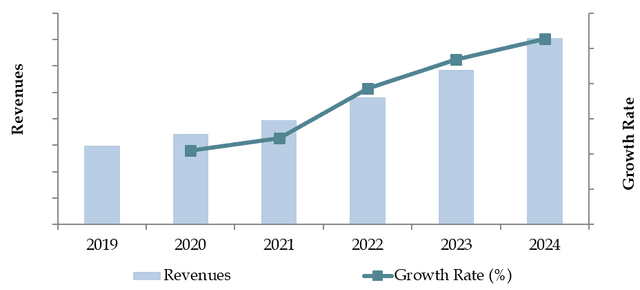
The Philippines consumer electronics market reached a valuation of PHP 300 billion in 2023, driven by rising consumer disposable income, increased digitalization, and the growing demand for smart home devices. The market is characterized by major players such as Samsung, LG, Sony, Huawei, and Xiaomi, who dominate the market with their extensive product portfolios and strong distribution networks. These companies are recognized for their focus on innovation, customer-centric services, and comprehensive after-sales support.
In 2023, Xiaomi launched a new range of affordable smart home devices, targeting budget-conscious consumers and contributing to its strong market growth. Metro Manila and Cebu are key markets due to their high population density and robust retail infrastructure.
Market Size for Philippines Consumer Electronics Industry on the Basis of Revenues in USD Billion, 2018-2024
Source: TraceData Research Analysis
What Factors are Leading to the Growth of Philippines Consumer Electronics Market?
Economic Factors: The steady economic growth and rising disposable income have significantly boosted the demand for consumer electronics in the Philippines. In 2023, electronics accounted for approximately 18% of household expenditure, driven by increased affordability and access to credit. This trend is particularly pronounced among the middle class, which is rapidly expanding and contributing to higher consumption levels.
Digitalization and Smart Home Adoption: The rise of digitalization and the increasing penetration of the Internet have led to a surge in demand for connected devices and smart home products. In 2023, around 25% of households in Metro Manila owned at least one smart home device, reflecting a growing trend towards connected living solutions. This demand is further amplified by government initiatives promoting digital literacy and infrastructure development.
Product Innovation: Leading manufacturers are focusing on product innovation, launching new models with advanced features to cater to the tech-savvy population. This includes devices with AI integration, energy efficiency, and enhanced connectivity. The continuous introduction of new technologies has fueled market growth, making consumer electronics more accessible and appealing to a broader audience.
Which Industry Challenges Have Impacted the Growth for Philippines Consumer Electronics Market?
High Import Dependency: The Philippines heavily relies on imported consumer electronics, making the market vulnerable to fluctuations in exchange rates and global supply chain disruptions. In 2023, imported products constituted over 80% of the market, leading to price volatility and constrained supply during periods of global economic uncertainty.
Regulatory Barriers: Stringent regulations concerning product safety and environmental standards can pose challenges for market entry, particularly for smaller players and new entrants. The implementation of mandatory certification and testing procedures can increase compliance costs, impacting product availability and market dynamics.
Intense Competition: The market is characterized by high competition among global and regional players. Price wars and aggressive marketing strategies are common, which can lead to thinner margins for companies. This competitive environment requires firms to continuously innovate and enhance customer experience to maintain their market positions.
What are the Regulations and Initiatives which have Governed the Market:
Product Safety and Compliance Standards: The Philippine government mandates that all consumer electronics sold within the country adhere to safety and quality standards established by the Department of Trade and Industry (DTI) and the Bureau of Philippine Standards (BPS). These standards cover aspects such as electrical safety, electromagnetic compatibility, and environmental compliance. In 2023, approximately 85% of consumer electronics products passed these standards on their first attempt, indicating a strong compliance level among manufacturers.
Import Regulations and Tariffs: The government enforces strict regulations on the importation of consumer electronics, which includes compliance with the ASEAN Harmonized Tariff Nomenclature (AHTN). Electronics imports are subject to varying tariff rates depending on product categories, with most items taxed at 5-10% of the import value. In 2023, imports of electronics dropped by 7% due to increased tariffs on non-essential goods as part of an economic policy to control foreign exchange outflows.
Digitalization and Infrastructure Development Initiatives: To support the growth of the consumer electronics market, the Philippine government has introduced several digitalization initiatives, such as the National Broadband Plan (NBP) and Free Public Wi-Fi Program. These initiatives aim to improve internet connectivity, particularly in rural areas, thereby boosting demand for connected devices and smart home products. In 2023, internet penetration in the Philippines reached 73%, a significant increase from previous years, driven by these government efforts.
Philippines Consumer Electronics Market Segmentation
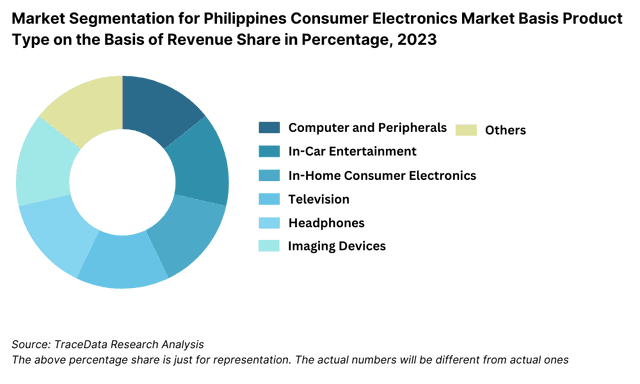
By Product Categories: The market is segmented into mobile devices, home appliances, personal care electronics, and entertainment devices. Mobile devices, including smartphones and tablets, hold the largest market share due to their essential role in everyday communication and high adoption rates. The home appliance segment, which includes refrigerators, washing machines, and air conditioners, is also a significant contributor, driven by urbanization and rising consumer purchasing power. Entertainment devices such as televisions and audio systems continue to see robust demand, particularly with the growing interest in smart and connected home entertainment solutions.
By Distribution Channels: Online platforms and traditional retail outlets are the two primary distribution channels for consumer electronics in the Philippines. Online channels, including platforms like Lazada and Shopee, have gained prominence, accounting for approximately 40% of total electronics sales in 2023 due to the convenience and competitive pricing they offer. Traditional retail outlets, such as appliance stores and electronic specialty shops, remain popular among consumers who prefer hands-on experience and direct customer support. OEM-branded stores and multi-brand outlets also contribute significantly to market distribution.
By Consumer Segments: The market can be further segmented by consumer income levels—low-income, middle-income, and high-income segments. The middle-income group represents the largest consumer segment, driving demand for mid-range products with good value for money. High-income consumers are inclined towards premium and luxury electronics, often seeking products with advanced features and superior brand reputation. Low-income consumers typically opt for budget-friendly or second-hand electronics, making this segment price-sensitive.
Competitive Landscape in Philippines Consumer Electronics Market
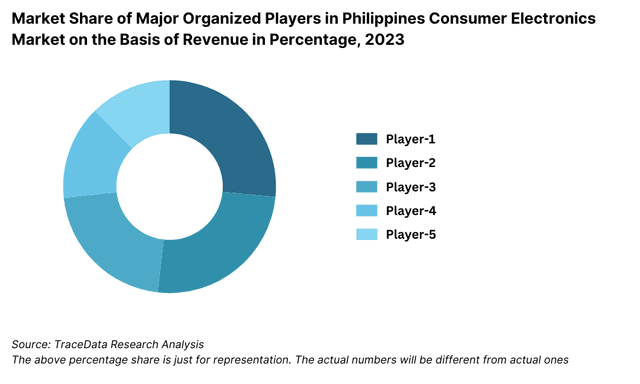
The Philippines consumer electronics market is relatively concentrated, with a few major players dominating the space. However, the expansion of online platforms such as Lazada, Shopee, and Zalora has diversified the market, offering consumers more choices and convenient purchasing options. Key players such as Samsung, LG, Sony, Huawei, and Xiaomi are recognized for their extensive product offerings, strong distribution networks, and innovation-driven strategies that set them apart from the competition.
Company Name | Segment | Establishment Year | Headquarters |
|---|---|---|---|
Acer Inc. | Computers and Peripherals | 1976 | New Taipei City, Taiwan |
HP Inc. | Computers and Peripherals | 1939 | Palo Alto, California, USA |
Lenovo Group Ltd. | Computers and Peripherals | 1984 | Beijing, China |
Sony Corporation | Televisions, Imaging Devices, Audio | 1946 | Tokyo, Japan |
LG Electronics | Televisions, Home Appliances | 1958 | Seoul, South Korea |
Samsung Electronics | Televisions, Mobile Devices, Home Appliances | 1938 | Suwon, South Korea |
Canon Inc. | Imaging Devices | 1937 | Tokyo, Japan |
Xiaomi Corp. | Mobile Devices, Smart TVs | 2010 | Beijing, China |
Pioneer Electronics | In-Car Entertainment | 1938 | Kawasaki, Kanagawa, Japan |
JBL (Harman) | Audio Devices, Headphones | 1946 | Stamford, Connecticut, USA |
Some of the recent competitor trends and key information about competitors include:
Samsung: Samsung is a leading player in the Philippines consumer electronics market, recording a 12% increase in smartphone sales in 2023. The company’s focus on integrating advanced features such as 5G connectivity and AI capabilities in its devices has contributed to its strong market position. Samsung's efforts to localize its marketing campaigns and improve after-sales support have further enhanced customer loyalty.
LG: Known for its extensive range of home appliances, LG reported a 15% growth in sales in 2023, driven by the launch of energy-efficient and smart home appliances. The company's focus on sustainability and innovation has resonated well with Filipino consumers seeking high-quality, durable products. LG’s competitive pricing strategy and partnerships with local retailers have also strengthened its market presence.
Sony: Sony, a major player in the entertainment electronics segment, saw a 20% increase in sales of home entertainment systems in 2023. The brand’s emphasis on superior sound and picture quality has attracted high-income consumers. Sony's collaboration with local e-commerce platforms to offer exclusive product bundles and promotions has been particularly successful in boosting sales.
Huawei: Despite facing challenges in the global market, Huawei maintained a stable position in the Philippines with a 10% growth in its wearables segment in 2023. The company’s focus on health-oriented features such as heart rate monitoring and sleep tracking has made its products popular among health-conscious consumers. Huawei has also been actively promoting its range of laptops and tablets, targeting remote workers and students.
Xiaomi: Xiaomi’s aggressive pricing strategy and extensive product portfolio have made it a popular choice among budget-conscious consumers. The company recorded a 25% increase in sales of smart home devices in 2023, driven by the launch of new, affordable models. Xiaomi’s strong presence in e-commerce platforms like Lazada and Shopee has enabled it to reach a wider audience, contributing to its rapid market expansion.
Lazada: As one of the leading e-commerce platforms in the Philippines, Lazada has become a go-to destination for consumer electronics. In 2023, Lazada recorded over 50 million monthly visitors, marking a 30% increase in user engagement compared to the previous year. The platform’s extensive product listings, user-friendly interface, and frequent promotions have made it a preferred choice for electronics buyers.
Shopee: Shopee has also gained a significant share in the consumer electronics market, with a 35% increase in sales of electronics in 2023. The platform's focus on offering competitive pricing, flash sales, and a strong presence in mobile-first markets has contributed to its rapid growth. Shopee’s integration of user reviews and ratings has enhanced customer trust, making it a key player in the online consumer electronics space.
What Lies Ahead for the Philippines Consumer Electronics Market?
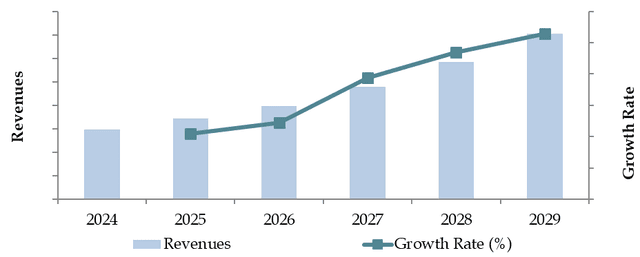
The Philippines consumer electronics market is expected to grow steadily by 2029, exhibiting a healthy CAGR during the forecast period. This growth will be driven by rising consumer incomes, rapid digitalization, and increasing adoption of smart and connected devices. The market is also poised to benefit from government initiatives aimed at improving digital infrastructure and promoting technology adoption.
Rising Demand for Smart Devices: With the increasing penetration of the Internet and smartphones, the demand for smart devices such as smart TVs, home automation products, and wearables is expected to see significant growth. This trend will be further supported by rising disposable incomes and a growing middle class that is more willing to invest in technology-driven lifestyles.
Expansion of E-Commerce Platforms: The rapid growth of e-commerce platforms like Lazada and Shopee is likely to drive the sales of consumer electronics, especially in underserved regions. E-commerce platforms offer a wider product range, competitive pricing, and convenience, making them a preferred channel for tech-savvy and value-conscious consumers. By 2029, online channels are expected to account for more than 50% of consumer electronics sales in the Philippines.
Focus on Sustainability and Energy Efficiency: With increasing consumer awareness of environmental issues, there is a growing preference for energy-efficient and eco-friendly electronics. Manufacturers are likely to focus on launching products that comply with energy efficiency standards and contribute to sustainability. This trend will be further bolstered by government incentives and regulations promoting green technology.
Adoption of Advanced Technologies: The integration of advanced technologies such as Artificial Intelligence (AI), Internet of Things (IoT), and 5G connectivity will reshape the consumer electronics landscape. These technologies are expected to enhance product functionality, provide personalized experiences, and support the growth of smart home ecosystems. The adoption of AI and IoT in consumer electronics will not only boost demand but also enable manufacturers to offer differentiated products.
Future Outlook and Projections for Philippines Consumer Electronics Market on the Basis of Revenue in USD Billion, 2024-2029
Philippines Consumer Electronics Market Segmentation
- By Market Structure:
- Organized Sector
- Unorganized Sector
- By Product Type:
- Computer and Peripherals
- In-Car Entertainment
- In-Home Consumer Electronics
- Television
- Headphones
- Imaging Devices
- By Computer and Peripherals
- Desktops
- Laptops
- Tablets
- Monitors
- Printers
- In-Car Entertainment:
- In-Car Navigation
- In-Car Speakers
- In-Dash Media Players
- In-Home Consumer Electronics:
- Audio Separates
- Digital Media Player Docks
- Hi-Fi System
- Home Cinema & Speaker System
- Speakers
- Others
- Television and Video Players:
- TV Types:
- Analog TV
- LCD
- OLED
- Plasma
- Other TVs
- Video Players:
- BD Players
- DVD Players
- Video Recorders
- TV Types:
- Headphones:
- Wireless Headbands
- Wireless Earphones
- TWS Earbuds
- Imaging Devices:
- Cameras
- Camcorders
- By Distribution Channel:
- Online Platforms (E-commerce)
- Offline Retail Stores
- Multi-brand Showrooms
- Exclusive Brand Outlets
- Wholesale Channels
- By Consumer Demographics:
- Age Group:
- 18-24
- 25-34
- 35-44
- 45-54
- 55+
- Income Group:
- Lower-Income
- Middle-Income
- Upper-Middle-Income
- High-Income
- Age Group:
- By Region:
- Metro Manila
- Central Visayas
- CALABARZON
- Mindanao
- Central Luzon
Players Mentioned in the Report:
- Acer
- Asus
- Lenovo
- Apple Inc.
- Samsung Electronics
- Sony Corporation
- LG Electronics
- Canon Inc.
- Nikon Corporation
- HP (Hewlett-Packard)
- Polytron
- JBL
- Pioneer Electronics Asia Centre
- Huawei Technologies Co., Ltd.
- Xiaomi Corporation
- Vivo
- Oppo
- Realme
- Hisense
- Sharp Corporation
Key Target Audience:
- Consumer Electronics Manufacturers
- E-Commerce Platforms
- Traditional Retail Chains
- Consumer Electronics Distributors
- Regulatory Bodies (e.g., Department of Trade and Industry)
- Research and Development Institutions
Time Period:
- Historical Period: 2018-2023
- Base Year: 2024
- Forecast Period: 2024-2029
Explore Flexible Purchase Options or Have Limited Budget?
Pay only for relevant chapters • Customizable report sections
Table of Contents
Choose individual sections to purchase. Mix and match as you like.
3.1. Manufacturers and Suppliers
3.2. Distribution Channels
3.3. Retailers and E-commerce Platforms
3.4. Consumer Groups
4.1. Value Chain Process-Entity relationships, Margin Analysis, Distributor, Dealers, Traders and Retailers
4.2. Business Model Canvas for the Philippines Consumer Electronics Market
5.1. Overview and Business Cycle
5.2. Household Penetration for Each Type of Consumer Electronics in Philippines, 2018-2023
5.3. Replacement Cycle of Consumer Electronics by Each Category, 2018-2023
8.1. Revenues, 2018-2024
8.2. Sales Volume, 2018-2024
9.1. By Market Structure (Branded and Local Brands), 2023-2024P
9.2. By Type (Computer and Peripherals, In-Car Entertainment, In-Home Consumer Electronics, Television, Headphones and Imaging Devices), 2018-2024
9.2.1. By Computer and Peripherals (Desktops, Laptops, Tablets, Monitors and Printers), 2018-2024
9.2.2. By In-Car Entertainment (In-Car Navigation, In-Car Speakers, In-Dash Media Players), 2018-2024
9.2.3. By In-Home Consumer Electronics (Audio Separates, Digital Media Player Docks, Hi-Fi System, Home Cinema & Speaker System, Speakers and others), 2018-2024
9.2.4. By Television and Video Players
9.2.4.1. By TV (Analog TV, LCD, OLED, Plasma, Other TVs), 2018-2024
9.2.4.2. By Video Players (BD Players, DVD Players and Video Recorders), 2018-2024
9.2.5. By Headphones (Wireless Headbands, Wireless Earphones and TWS Earbuds) 2018-2024
9.2.6. By Imaging Devices (Camers and Camcorders), 2018-2024
9.3. By Distribution Channel (MBOs, EBOs, Online and others), 2023-2024P
9.4. By Regions, 2023-2024P
9.5. By Technology Adoption (Smart, AI-Enabled, IoT-Enabled, and Non-Smart), 2023-2024P
10.1. Consumer Landscape and Segment Analysis
10.2. Customer Journey and Decision-Making Process
10.3. Need, Desire, and Pain Point Analysis
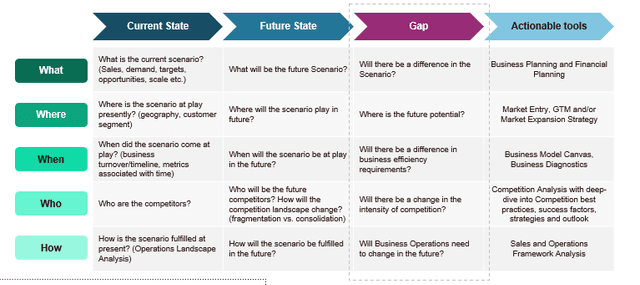
10.4. Gap Analysis Framework
10.5. By Income, Age and Gender Split, 2024
11.1. Trends and Developments in the Philippines Consumer Electronics Market
11.2. Growth Drivers for Philippines Consumer Electronics Market
11.3. SWOT Analysis for Philippines Consumer Electronics Market
11.4. Issues and Challenges in the Philippines Consumer Electronics Market
11.5. Government Regulations and Initiatives for Philippines Consumer Electronics Market
12.1. Market Size and Future Potential for Online Consumer Electronics Market, 2018-2029
12.2. Business Model and Revenue Streams of Leading Online Platforms
12.3. Cross Comparison of Leading Online Consumer Electronics Platforms Based on Operational and Financial Parameters
13.1. Finance Penetration Rate and Average Ticket Size for Consumer Electronics, 2018-2029
13.2. Trends in Financing Options for Consumer Electronics
13.3. Popular Consumer Electronics Segments with Higher Finance Penetration Rates
13.4. Finance Split by Banks/NBFCs/Private Finance Companies, 2023-2024P
13.5. Average Loan Tenure for Consumer Electronics Financing in Philippines
13.6. Finance Disbursement for Consumer Electronics in INR Crores, 2018-2024P
16.1. Market Share of Key Players in Philippines Consumer Electronics Market, 2018-2024
16.2. Market Share of Key Players in Philippines Computer and Peripherals Market, 2018-2024
16.3. Market Share of Key Players in Philippines In-Car Entertainment Market, 2018-2024
16.4. Market Share of Key Players in Philippines In-Home Consumer Electronics Market, 2018-2024
16.5. Market Share of Key Players in Philippines Television Market, 2018-2024
16.6. Market Share of Key Players in Philippines Headphones Market, 2024
16.7. Market Share of Key Players in Philippines Imaging Devices Market, 2024
16.8. Benchmarking of Key Competitors in Philippines Consumer Electronics Market including Operational and Financial Parameters
16.9. Heat Map Analysis for Major Players in Philippines Consumer Electronics Market
16.10. Strengths and Weaknesses Analysis
16.11. Operating Model Analysis Framework
16.12. Gartner Magic Quadrant
16.13. Bowmans Strategic Clock for Competitive Advantage
17.1. Revenues, 2025-2029
17.2. Sales Volume, 2025-2029
18.1. By Market Structure (Branded and Local Brands), 2025-2029
18.2. By Type (Computer and Peripherals, In-Car Entertainment, In-Home Consumer Electronics, Television, Headphones and Imaging Devices), 2025-2029
18.2.1. By Computer and Peripherals (Desktops, Laptops, Tablets, Monitors and Printers), 2025-2029
18.2.2. By In-Car Entertainment (In-Car Navigation, In-Car Speakers, In-Dash Media Players), 2025-2029
18.2.3. By In-Home Consumer Electronics (Audio Separates, Digital Media Player Docks, Hi-Fi System, Home Cinema & Speaker System, Speakers and others), 2025-2029
18.2.4. By Television and Video Players
18.2.4.1. By TV (Analog TV, LCD, OLED, Plasma, Other TVs), 2025-2029
18.2.4.2. By Video Players (BD Players, DVD Players and Video Recorders), 2025-2029
18.2.5. By Headphones (Wireless Headbands, Wireless Earphones and TWS Earbuds) 2025-2029
18.2.6. By Imaging Devices (Camers and Camcorders), 2025-2029
18.3. By Distribution Channel (MBOs, EBOs, Online and others), 2025-2029
18.4. By Region, 2025-2029
18.5. By Technology Adoption (Smart, AI-Enabled, IoT-Enabled, and Non-Smart), 2025-2029
18.6. Recommendations
18.7. Opportunity Analysis
Discuss a Customized Research Scope
Custom research scope • Tailored insights • Industry expertise
Research Methodology
Step 1: Ecosystem Creation
Map the ecosystem and identify all the demand-side and supply-side entities for the Philippines Consumer Electronics Market. This includes key stakeholders such as manufacturers, distributors, retailers, and end-users. Basis this ecosystem, we will shortlist leading 5-6 companies in the country based on their financial performance, market share, and distribution capabilities.
Sourcing is done through industry articles, market reports, government publications, and proprietary databases to gather secondary data and build a foundational understanding of the industry landscape.
Step 2: Desk Research
An exhaustive desk research process is undertaken by referencing diverse secondary and proprietary databases to collect industry-level insights. This involves analyzing aspects such as market size, growth trends, product segmentation, consumer preferences, and competitive landscape.
The desk research is supplemented by a detailed examination of company-level data, utilizing sources such as press releases, annual reports, financial statements, and strategic announcements. This helps in building a comprehensive understanding of both the market and individual companies’ strategies.
Step 3: Primary Research
A series of in-depth interviews with key stakeholders, including C-level executives, marketing managers, and product development teams of various consumer electronics companies, is conducted. The interviews are designed to validate desk research findings, authenticate statistical data, and extract deeper operational and strategic insights.
A bottom-up approach is employed to estimate the overall market size by aggregating sales figures, production capacity, and distribution data collected from individual companies. The validation strategy includes disguised interviews wherein the team approaches companies as potential customers. This approach helps verify operational and financial information, providing a more nuanced view of revenue streams, pricing strategies, and market dynamics.
Step 4: Data Triangulation and Market Modeling
- The data collected through primary and secondary research is cross-verified using multiple methodologies, including top-down and bottom-up approaches. Market modeling exercises are performed to estimate market size, forecast growth, and identify key trends. The triangulation process ensures that data points are consistent, reliable, and accurate, thereby enhancing the robustness of research findings.
See What's Inside the Report
Get a preview of key findings, methodology and report coverage
Frequently Asked Questions
The Philippines consumer electronics market is expected to grow steadily, reaching a valuation of PHP 400 billion by 2029. This growth is driven by rising disposable incomes, increasing consumer preference for smart and connected devices, and rapid digitalization across the country. The market's potential is further enhanced by the expansion of e-commerce platforms, which make it easier for consumers to access a wide range of products.
The Philippines Consumer Electronics Market features several key players, including Samsung, LG, and Sony. These companies dominate the market due to their extensive product portfolios, strong brand presence, and innovative technologies. Other notable players include Huawei, Xiaomi, and emerging local brands that cater to budget-conscious consumers.
The primary growth drivers include rising consumer incomes, increasing adoption of smart and connected devices, and the growth of e-commerce platforms. Government initiatives promoting digital transformation and infrastructure development are also boosting market growth. Additionally, a growing middle class with higher spending power is driving demand for premium and high-quality consumer electronics.
The Philippines Consumer Electronics Market faces several challenges, including high import dependency, which makes the market vulnerable to exchange rate fluctuations and supply chain disruptions. Regulatory challenges, such as compliance with product safety and environmental standards, can also impact market dynamics. Additionally, the intense competition from both international and local players puts pressure on margins and pricing strategies.
License Options
PDF + Excel
Complete report package
$4,000
Excel Only
Data and analytics
$2,500
Custom Sections
Starts from $100
$0